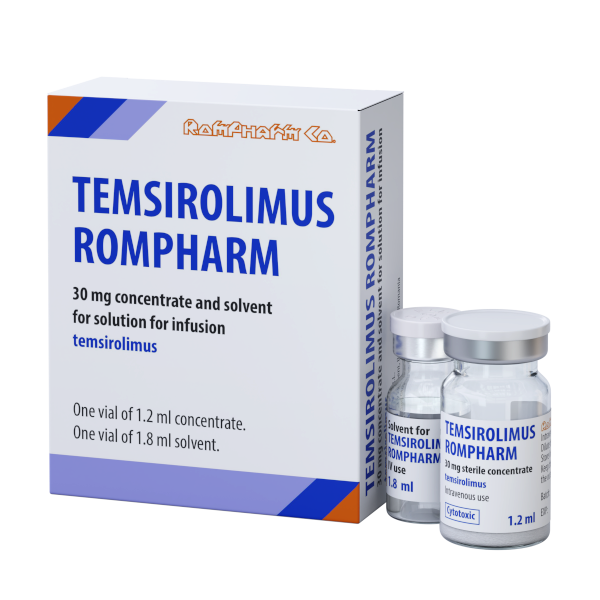
Temsirolimus Rompharm 30 mg concentrate and solvent for solution for infusion
Therapeutic indications
Renal cell carcinoma
Temsirolimus Rompharm is indicated for the first-line treatment of adult patients with advanced renal cell carcinoma (RCC) who have at least three of six prognostic risk factors.
Mantle cell lymphoma
Temsirolimus Rompharm is indicated for the treatment of adult patients with relapsed and/or refractory mantle cell lmyphoma (MCL)
Temsirolimus is a selective inhibitor of mTOR (mammalian target of rapamycin). Temsirolimus binds to an intracellular protein (FKBP-12), and the protein/temsirolimus complex binds and inhibits the activity of mTOR that controls cell division. In vitro, at high concentrations (10-20 μM), temsirolimus can bind and inhibit mTOR in the absence of FKBP-12. Biphasic dose response of cell growth inhibition was observed. High concentrations resulted in complete cell growth inhibition in vitro, whereas inhibition mediated by FKBP-12/temsirolimus complex alone resulted in approximately 50% decrease in cell proliferation. Inhibition of mTOR activity results in a G1 growth delay at nanomolar concentrations and growth arrest at micromolar concentrations in treated tumour cells resulting from selective disruption of translation of cell cycle regulatory proteins, such as D-type cyclins, c-myc, and ornithine decarboxylase. When mTOR activity is inhibited, its ability to phosphorylate, and thereby control the activity of protein translation factors (4E-BP1 and S6K, both downstream of mTOR in the P13 kinase/AKT pathway) that control cell division, is blocked.
In addition to regulating cell cycle proteins, mTOR can regulate translation of the hypoxia-inducible factors, HIF-1 and HIF-2 alpha. These transcription factors regulate the ability of tumours to adapt to hypoxic microenvironments and to produce the angiogenic factor vascular endothelial growth factor (VEGF). The anti-tumour effect of temsirolimus, therefore, may also in part stem from its ability to depress levels of HIF and VEGF in the tumour or tumour microenvironment, thereby impairing vessel development.