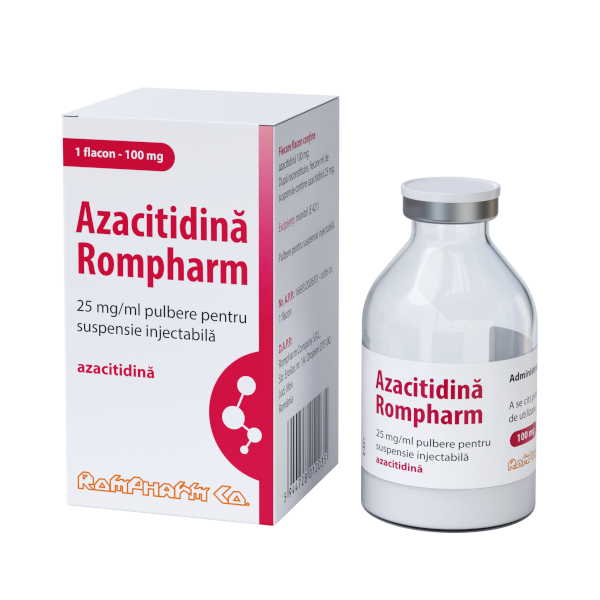
Azacitidine Rompharm, 25 mg/ml, powder for suspension for injection
Azacitidine Rompharm is an anticancer medicine that contains the active substance azacitidine and belongs to a group of medicines called „antimetabolites”.
Azacitidine Rompharm is indicated for the treatment of adult patients who are not eligible for haematopoietic stem cell transplantation (HSCT) with:
-intermediate‑2 and high-risk myelodysplastic syndromes (MDS) according to the International Prognostic Scoring System (IPSS),
-chronic myelomonocytic leukaemia (CMML) with 10‑29% marrow blasts without myeloproliferative disorder,
-acute myeloid leukaemia (AML) with 20‑30% blasts and multi-lineage dysplasia, according to World Health Organisation (WHO) classification,
-AML with > 30% marrow blasts according to the WHO classification.
These disorders affect the bone marrow, disrupting the body\'s ability to produce healthy blood cells normally.
Azacitidine is believed to exert its antineoplastic effects by multiple mechanisms including cytotoxicity on abnormal haematopoietic cells in the bone marrow and hypomethylation of DNA. The cytotoxic effects of azacitidine may result from multiple mechanisms, including inhibition of DNA, RNA and protein synthesis, incorporation into RNA and DNA, and activation of DNA damage pathways. Non-proliferating cells are relatively insensitive to azacitidine. Incorporation of azacitidine into DNA results in the inactivation of DNA methyltransferases, leading to hypomethylation of DNA. DNA hypomethylation of aberrantly methylated genes involved in normal cell cycle regulation, differentiation and death pathways may result in gene re-expression and restoration of cancer-suppressing functions to cancer cells. The relative importance of DNA hypomethylation versus cytotoxicity or other activities of azacitidine to clinical outcomes has not been established.