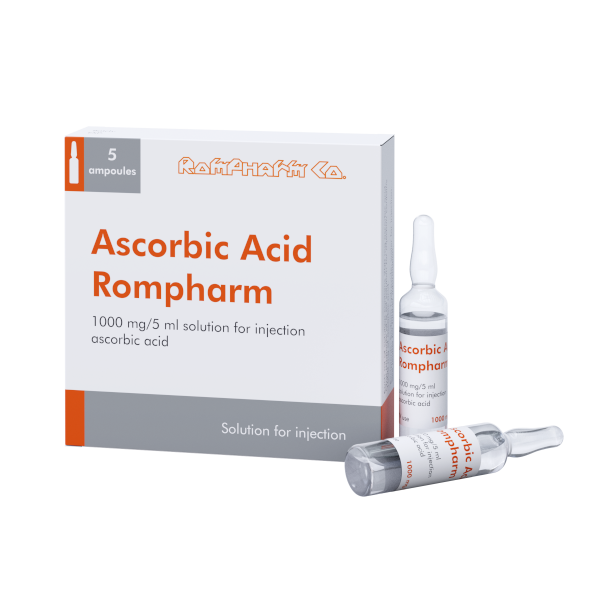
Vitamin C Rompharm 1000 mg/5 ml, solution for injection
Therapeutic indications
Ascorbic acid injections are used in cases of severe deficiency or when oral administration in tablet form is difficult.
Pharmacological effects: At doses significantly exceeding the recommended daily intake (90 mg), vitamin C has little additional pharmacological effect, except for the rapid correction of the symptoms of hypo- and avitaminosis (scurvy).
Physiological functions: Ascorbic acid acts as a cofactor for various hydroxylation and amidation reactions, transferring electrons to enzymes and thereby providing them with reducing equivalents. It participates in the hydroxylation of proline and lysine residues of procollagen, resulting in the formation of hydroxyproline and hydroxylysine (post-translational modification of collagen). It is also involved in the oxidation of lysine side chains in proteins, leading to the formation of hydroxytrimethyllysine during carnitine biosynthesis; in the conversion of folic acid to folinic acid; in the hepatic microsomal metabolism of drugs; and in the hydroxylation of dopamine to form norepinephrine.
Vitamin C increases the activity of amidating enzymes involved in the processing of oxytocin, antidiuretic hormone (ADH), and cholecystokinin. It also participates in steroidogenesis in the adrenal glands.
Its principal role in tissues is participation in the synthesis of collagen, proteoglycans, and other organic components of the extracellular matrix of teeth, bones, and the vascular endothelium.